The story
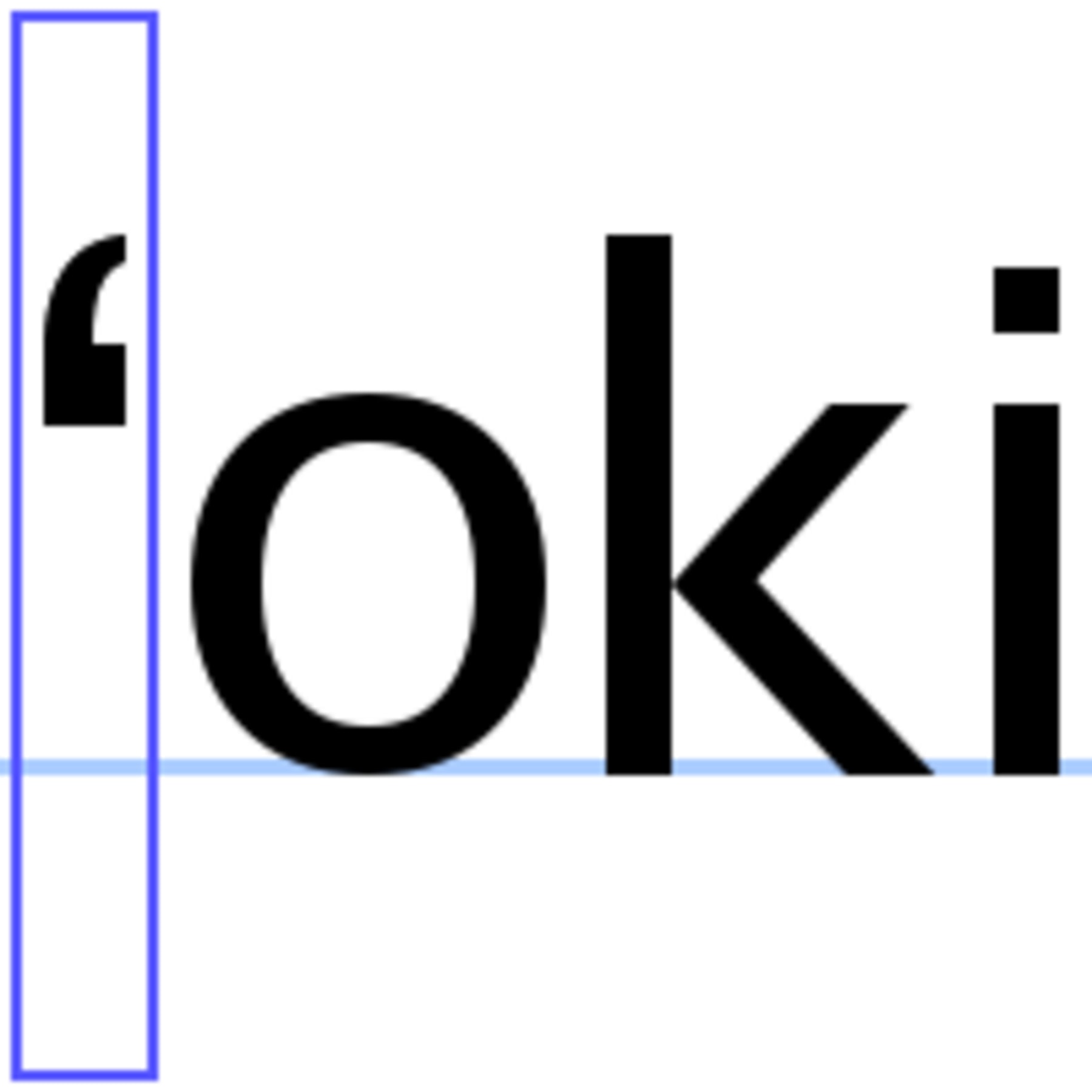
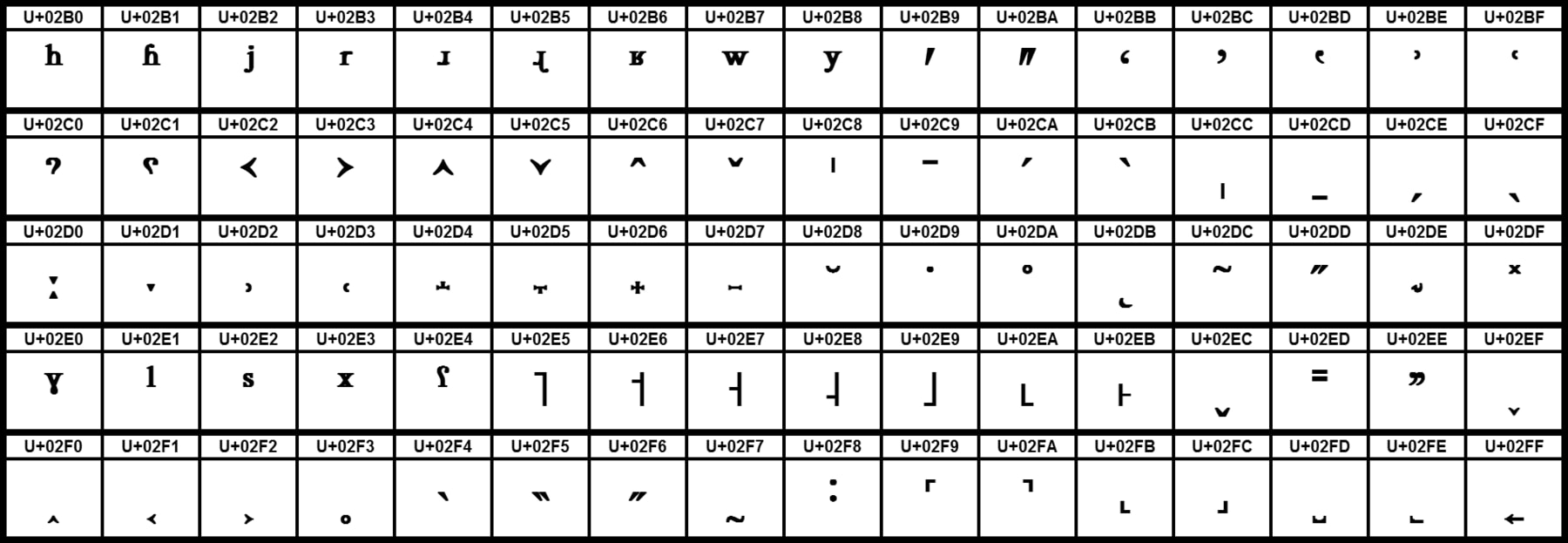
The ʻokina looks like a stray comma. It isn't punctuation: in Hawaiian orthography it's a letter, marking a glottal stop, and Unicode gives it its own identity: U+02BB, MODIFIER LETTER TURNED COMMA.
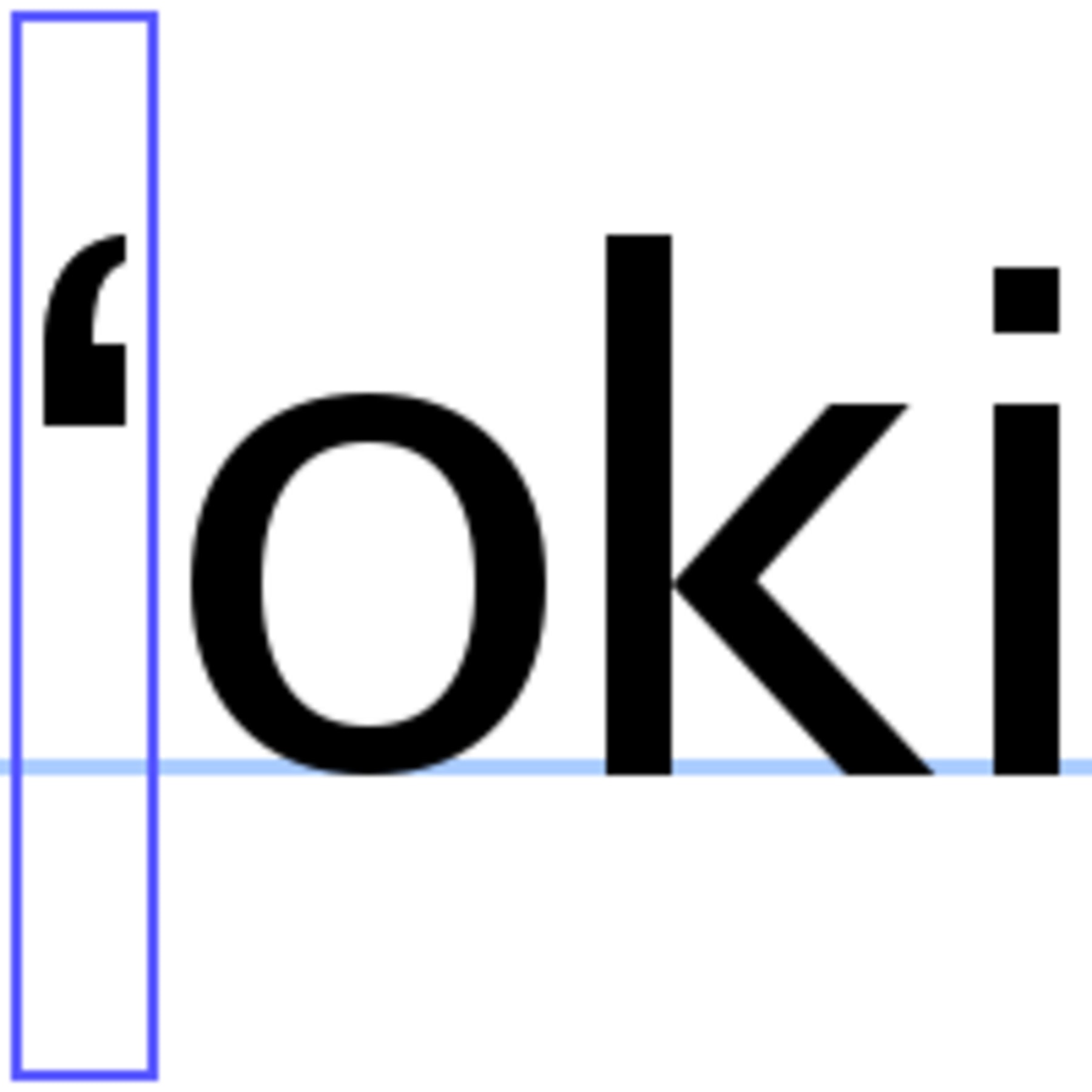
The marks themselves are older than any effort to type them. Missionaries built Hawaiian's first written alphabet in 1826 without either one. The ʻokina entered the language's written record in 1865, in Lorrin Andrews's dictionary; the kahakō didn't follow until 1945, in a dictionary and grammar credited to Henry Judd, Mary Kawena Pukui, and John Stokes. Pukui spent the 1930s through the 1950s compiling the word lists that eventually became the Pukui-Elbert Hawaiian Dictionary, written with linguist Samuel Elbert. It took until 1978 for the ʻAhahui ʻŌlelo Hawaiʻi, the Hawaiian Language Society, to formally recommend writing both marks consistently, and a 1981 paper by linguist William H. Wilson to lay out the standardized orthography built on that recommendation. The marks were settled on paper a full generation before anyone had to make a computer understand them.
That gap fell to Hale Kuamoʻo, the Hawaiian language center created by the state legislature in 1989 and folded, eight years later, into the newly founded Ka Haka ʻUla O Keʻelikōlani College of Hawaiian Language at the University of Hawaiʻi at Hilo -- the first Hawaiian-language college in the world. In the early-to-mid 1990s, under staffer Keola Donaghy, Hale Kuamoʻo built a set of fonts called HI Fonts to get the marks onto a screen that had no idea either one existed. The method was simple and a little devious: it took over a character slot nobody was using for Hawaiian and drew the ʻokina and kahakō glyphs on top of it. Hale Kuamoʻo's own technical documentation lays out exactly which slot -- on Windows, position 255, better known as ÿ, y with dieresis; on Macintosh, position 216. Type the ʻokina in a HI Fonts document, switch to a font that doesn't have HI Fonts installed, and a ÿ appears where the letter should be. A commercial vendor, Guava Graphics, later built compatible fonts of its own. Donaghy now tells people not to use HI Fonts for anything but reopening old files; he built it, and he's the one who put up the warning sign.
That gap is invisible to a reader and very visible to a machine. Type a place name with an ʻokina today and, depending on the file's vintage, you may be searching for one of several different underlying characters that all render the same way onscreen. A database, a search box, or a spellchecker sees different words where a person sees one.

Unicode was the fix, and Hale Kuamoʻo moved on it early. Kualono, the Hawaiian-language website it had run since 1994, switched its entire site to UTF-8 in June 1998. The switch is documented outside Hawaiʻi, too: on June 2, 1998, Unicode Consortium contributor Kenneth Whistler posted to the official Unicode mailing list to announce that "the UTF8 portion of the site just went live today," naming Donaghy as the person who built it and inviting the list to send him feedback. Most web browsers of 1998 couldn't render Unicode text correctly yet. Hale Kuamoʻo published in it anyway.
Publishing in the right characters didn't settle which character was right. In November 2001, Apple's own manager of fonts and Unicode, Deborah Goldsmith, raised a technical objection to U+02BB on the Unicode mailing list: because the character was catalogued as "bidi neutral," she worried it would behave strangely if Hawaiian text ever sat next to Arabic or Hebrew. She also ruled out the obvious substitute, U+2018 (the left single quotation mark), because word processors double-click-select punctuation differently than letters. Whistler wrote back to correct her: the Unicode database actually listed U+02BB with left-to-right directionality, not neutral, and that property had been stable since Unicode version 1.1.5. U+02BB had existed since Unicode 1.1 in June 1993, as a general-purpose letter for glottal stops used across a scatter of orthographies, long before Hawaiian needed it. There is no dedicated Hawaiian-specific proposal document in the Unicode Consortium's public L2 archive; the 2001 exchange was two engineers arguing over which existing character deserved a company's commitment. Apple's answer arrived the following year: Mac OS X 10.2 "Jaguar," shipped August 24, 2002, included a Hawaiian keyboard layout and okina/kahakō support built into the system fonts.
The Unicode Standard itself names the mark. Its chapter on modifier letters says that U+02BB modifier letter turned comma is used to represent the ʻokina in the orthography for Hawaiian. The same chapter explains that the letter category Lm covers some characters with punctuation-like shapes, such as raised commas, because they behave like letters and occur in the orthography of regular words. That wording suggests the ʻokina’s classification as a letter was a judgment about how it works inside words.
Unicode's own documents make the case in writing. The names list under U+02BB says it is used in some Polynesian orthographies for the glottal stop, and it points to the left single quotation mark only as a look-alike. The Unicode Standard goes further: its chapter on modifier letters says that small raised comma-shaped characters are often substituted for a glottal stop, and that U+02BB, in particular, is used in Hawaiian orthography as the ʻokina. The reason this matters for software is the category. U+02BB is a letter, general category Lm, which the Standard gives to some punctuation-shaped characters that nevertheless have letterlike behavior and occur as part of the orthography for regular words. The left single quotation mark, U+2018, is punctuation. A program that sorts, selects, or counts words by character category can therefore treat the same Hawaiian word differently depending on which of the two look-alikes was typed, long before anyone reads the page.
In September 2008 the ʻokina reached astronomy. On September 17 the International Astronomical Union announced that the fifth dwarf planet would be called Haumea, after the Hawaiian goddess of childbirth and fertility, and named its two moons: Hiʻiaka, after the goddess said to have been born from Haumea's mouth and the matron goddess of the island of Hawaiʻi, and Namaka, a water spirit. Five days later Karl Pentzlin posted to the Unicode mailing list under the subject line “U+02BB enters the Solar System,” observing that the release spelled Hiʻiaka correctly with U+02BB, even in its downloadable UTF-8 plain-text version. By then the character had been in Unicode for fifteen years.
The vendors arrived one at a time. With iPhone OS 3.0 in June 2009, a user could press and hold a vowel and choose the kahakō or ʻokina from a list, and Keola Donaghy told the university's news office that users no longer had to install custom fonts or a keyboard to display ʻōlelo Hawaiʻi. iOS 5, released in October 2011, added a Hawaiian keyboard, a separate kahakō key beside the ʻokina, and a Hawaiian spell-checker built on a word list Donaghy's team supplied to Apple. His own caveat was that the checker did not consistently catch a missing word-initial ʻokina. Donaghy also wrote that Windows 8 ships with a Hawaiian keyboard baked into the system, with the apostrophe key typing the ʻokina and right Alt plus the apostrophe giving back an ordinary apostrophe, and Microsoft's documentation today lists Hawaiian with its own layout, keyboard ID 00000475. Google's public record is thinner: a June 2017 post by a Gboard product manager announced suggestions and gesture typing for Hawaiian, along with Maori and Samoan, in Gboard for Android version 6.3. That post says what was added in 2017. It does not say when basic Hawaiian typing first reached Android.
The fix took decades to reach ordinary keyboards. In 2020, University of Hawaiʻi Maui College professor Keola Donaghy built a Hawaiian keyboard extension for Chrome OS, and Google shipped it free through the Chrome Web Store. Typing the ʻokina and kahakō no longer required a workaround -- except that the extension's own apostrophe key still maps to U+2018, the left single quotation mark Whistler had already dismissed twenty years earlier, not U+02BB. Even the tool built to fix the problem hasn't fully closed it.
Nor has the rest of the web. Android's default font, as Donaghy has documented for years on his own site, historically lacked a glyph at U+02BB altogether, so the letter rendered as an empty box unless a user changed fonts -- something most Android handset makers don't let people do. Type designers have been quietly filing the same complaint against some of the most widely used typefaces on the internet: in 2017, Google Fonts engineer Dave Crossland opened an issue after "someone in Hawaiʻi" wrote to tell him U+02BB was absent from the project's Latin Extended subset; in 2019, a contributor flagged the same gap in Public Sans, the U.S. federal government's own web typeface, noting that fewer than thirty Google Fonts supported the full Hawaiian character set at all; in 2022, someone filed the identical bug against Open Sans, one of the most-used fonts on the web. Two of the three got fixed, with names and dates attached. Google's own latin-ext glyph set sat on Crossland's request for almost six years before Google Fonts engineer Simon Cozens closed it on August 11, 2023, writing that the characters "have been added to the Latin glyphset, and seem to work now." Public Sans moved faster: its designer, Dan O. Williams, replied to the bug report the same day it was filed -- "I will absolutely add this. Mahalo!" -- and shipped a fix within 24 hours after a back-and-forth with font engineer Denis Moyogo Jacquerye over exactly how curved the glyph should be so it wouldn't be mistaken for a stray quotation mark. Open Sans's bug remains untouched years later -- zero replies, no pull request. Government forms have carried Hawaiian place names since statehood. Some of the type they were set in still can't spell them.
Hawaiʻi put the marks into law long before it asked anyone to use them consistently. House Bill 2409 became Act 169 on June 12, 1992. Its findings say that macrons and glottal stops were already common in local publications and on county street signs, that “there has been no official encouragement of their use,” and that “because the glottal stop is a consonant in the Hawaiian language leaving it out changes the meaning of a word.” The operative sentence is permissive: macrons and glottal stops “may be used” in state and county documents, and any rule that discourages them “shall be void.” Thirty years later, Act 170, approved June 27, 2022, added a duty. From July 1, 2023, state and county letterhead that contains Hawaiian words has to spell them consistently, measured against references that open with the 1986 Pukui and Elbert dictionary and include Place Names of Hawaii, consultation with native speakers, and the Hawaiian newspaper collection. A 2019 bill, House Bill 780, proposed going further by stating that an ʻokina “shall be represented as a left single quotation mark,” which is U+2018, the look-alike. That sentence does not appear in Act 170 as enacted. The law says what the marks are for. It does not say which code point to type.
The federal government's own database had to learn the marks too. GNIS grew out of a compilation that ran from 1978 to 1982 and recorded the names printed on the 1:24,000 USGS topographic maps, which carried Hawaiian names without ʻokina or kahakō. A paper the U.S. Board on Geographic Names submitted to a United Nations expert group in 2006 states the old rule directly: until the 1990s it was federal policy to omit most diacritics from place names on federal maps, with exceptions for the Spanish tilde and French accents. For Hawaiian names, the paper says, the marks had “always been omitted” before 1995. The fix was a human review. In the late 1990s the Hawaiʻi Board on Geographic Names began checking each of more than 10,000 names, adding a mark only where there was solid evidence for it and leaving a name bare until further research could be done. By 2022, according to a draft Interior Department manual chapter, the board had reviewed every name on the quadrangle maps, and because federal practice allows one official name per feature, its decisions become the spelling that federal agencies use.
In December 2023 the Department of the Interior signed its own rule for how its bureaus write Hawaiian, Departmental Manual chapter 513 DM 3. The draft circulated for consultation in early 2023, with one live session on February 27 and comments due March 31, shows what its authors thought needed saying. It opens with four words that differ only in their marks: pau, finished; paʻu, soot; paʻū, damp; pāʻū, skirt. It calls the ʻokina a consonant and tells staff to use the marks, with a list of exceptions, among them that “Hawaiian” takes no ʻokina while the possessive “Hawaiʻi’s” does. It names the Pukui and Elbert dictionary as the baseline, allows the Māmaka Kaiao dictionary from ʻAha Pūnana Leo and Hale Kuamoʻo as an alternative, and says that when state and federal place-name decisions disagree, the federal name is used. Quoted material, the draft says, “shall remain as published or submitted with no insertions or deletions of diacritical marks.” I read the draft rather than the final chapter, so its wording may have changed before the December 2023 signing.
The most visible place a Hawaiian mark has met a government database may be the license plate. House Bill 1861 was signed on June 21, 2024, and as Act 64 it requires that plates issued on or after January 1, 2025 bear the word “Hawaiʻi” with the ʻokina across the top, while earlier plates remain valid. A plate is a small product, but it needs a typeface that has the character, a process that can print it, and a registration system that stores the text.
Typing the ʻokina is one problem. Hearing it is another. In January 2019 a Hawaiʻi user asked the open-source eSpeak NG speech engine to add Hawaiian language support, noting that most street names in Hawaiʻi are Hawaiian words and that a screen reader's guess at them could be very confusing. In June 2020 a user named Qchristensen reported on the NVDA screen reader's tracker that the state's own name was being spoken two different wrong ways: Microsoft's OneCore voice said “Ha-wee,” and eSpeak NG read the character's code point aloud, as in “Ha-wa-02BB-eye.” NVDA merged an eSpeak NG update that July whose description cites an upstream fix for the pronunciation of Hawaiʻi in English. The pattern repeats the rest of this essay: the text is correct because the mark exists in Unicode, but a system downstream has no rule for it until someone writes one.
Wikipedia's editors had to decide where the marks belong in a project built on titles that people search. The English-language style guide for Hawaii-related articles, as of this writing, tells editors to use U+02BB for the ʻokina rather than an apostrophe or a quotation mark, and to follow the Hawaiʻi Board on Geographic Names and GNIS for place-name spellings, so the review described above becomes the source the encyclopedia cites. It also records an exception that anyone who has searched for the state will recognize: the U.S. state and the archipelago are usually spelled Hawaii, without the mark. Its example of why the marks carry meaning is a pair of places, Kalaʻe and Ka Lae, which are different locations. The guide is a living page, so its wording can change, but the point holds: someone has to write down which character is the letter and which is only a look-alike, and on that site volunteers did.
Some of that catching-up has moved off the screen entirely. In March 2022, the Hawaiʻi Department of Transportation announced that every new or replacement highway sign would carry the ʻokina and kahakō, starting with interstate routes H-1 and H-201 -- ʻAiea, ʻEwa, Waiʻanae, Kāneʻohe, Wahiawā, Hālawa -- and expanding to the Pali Highway and the Leeward coast by the end of that year. A driver reading a road sign in 2021 was looking at a spelling error the same state government had known how to fix on a computer screen since 2002.
Hawaiʻi’s legislature made a parallel argument in 1992. Act 169, approved June 12, 1992, observed that the glottal stop is a consonant in Hawaiian, so leaving it out changes the meaning of a word. It then allowed macrons and glottal stops in documents prepared by or for state and county agencies, and declared void any rule that discouraged them.
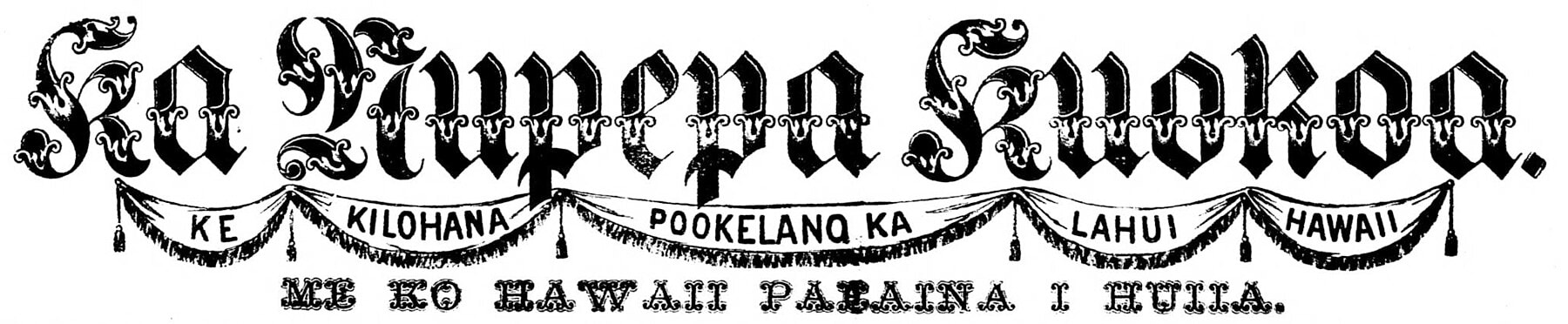
And the argument didn't stay settled once the marks became easy to type. A 2025 paper out of the University of Hawaiʻi at Hilo's computer science department -- by Jaden Kapali, Keaton Williamson, and Winston Wu, presented at the EMNLP conference -- points out that plenty of fluent Hawaiian speakers still don't write with the ʻokina and kahakō at all. The Niʻihau community, the last population of intact native Hawaiian speakers, largely follows what the paper calls "Traditional Spelling," the missionary-era orthography without either mark, the same one Ka Baibala Hemolele, the Hawaiian Bible, was printed in. "Modern Spelling," with the marks, took hold with the Hawaiian-medium schools of the 1980s and has been the default in software and signage ever since. The paper's numbers are specific: converting Traditional Spelling to Modern Spelling, a plain 4-gram statistical model hit 3.98% word-error rate, more than twice as accurate as the best neural network they tried (a Transformer, at 9.33%) and over five times more accurate than a fine-tuned large language model (20.91%). A 5-shot prompt to a small, non-fine-tuned Llama model did worse than doing nothing at all, posting a 164% word-error rate by hallucinating and rewriting whole words. Their training data -- 76,980 sentences -- came from Kaniʻāina, a digital archive of 1970s-80s Hawaiian-language radio recordings built by Larry Kimura, the UH Hilo professor and immersion-education pioneer whose decades of taped interviews with native speakers had become, without anyone planning it that way, a machine-learning dataset. Half a century after the marks were standardized on paper, and thirty years after Hale Kuamoʻo found a way to fake them on a screen, a machine now has to answer a second question beyond whether it can render an ʻokina correctly: whether the text in front of it wants one there at all.
A related question (how that same language got digitized and made searchable in the first place) is the subject of Hawaiʻi Built a Searchable World Before Search Engines.
Sources added October 3, 2026 (each checked on that date): The Unicode Standard, version 15.0, chapter 7, unicode.org/versions/Unicode15.0.0/ch07.pdf (current wording not rechecked). Hawaiʻi Act 169, Session Laws of Hawaiʻi 1992 (H.B. No. 2409), data.capitol.hawaii.gov/sessions/sessionlaws/Years/SLH1992/SLH1992_Act169.pdf.